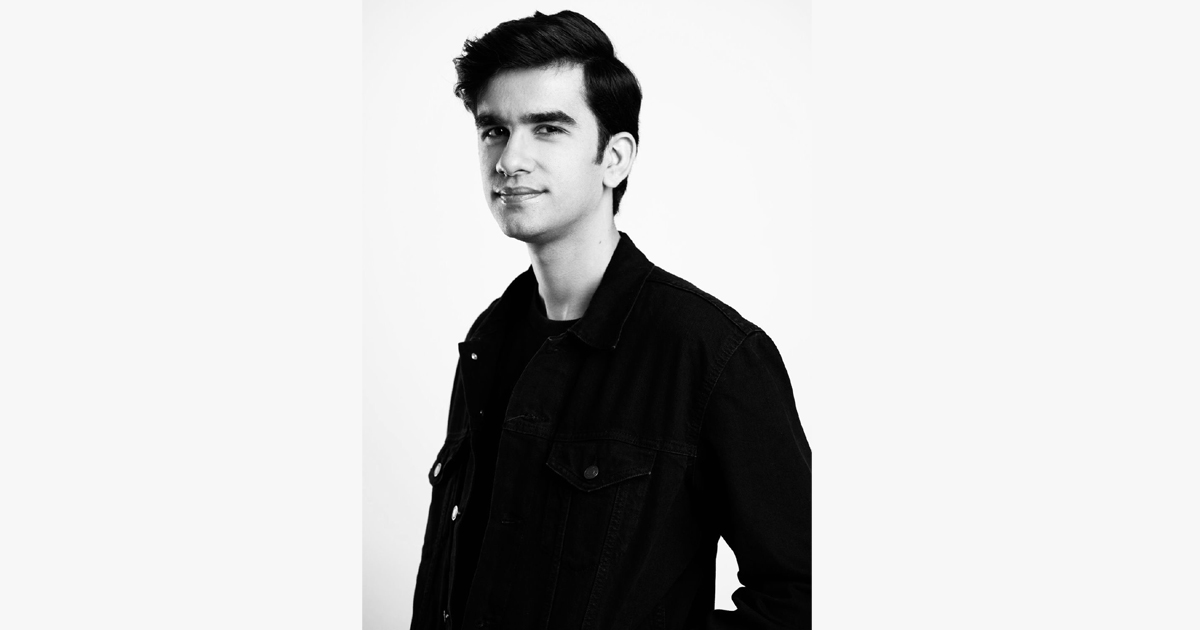
In an era where artificial intelligence is reshaping creative industries at unprecedented speed, few studios are attempting to redefine the filmmaking process as fundamentally as Studio Blo. Positioned as India’s first AI-native content studio, the company blends traditional cinematic craftsmanship with cutting-edge generative tools without compromising on storytelling integrity.
In this exclusive interview, Rishabh Suri, Co-Founder & CCO of Studio Blo, unpacks what “AI-native” truly means beyond the buzzword. From replacing physical sets and cameras while preserving human-led direction, to building proprietary platforms like Kubrik and FAIMOUS, Suri shares how lean operational systems, empathetic design thinking, and disciplined creative leadership are enabling the studio to scale cinematic, distribution-grade content globally.


Drawing from his experience working with global brands such as Major League Baseball and Warner Music, he also reflects on where AI delivers real creative and commercial value and where it doesn’t. For Suri, AI is not the creator but the accelerator: a powerful production hyperscaler guided by human vision, ethics, and intent.
1. Studio Blo positions itself as India’s first AI-native content studio. From an operations and scale standpoint, what does “AI-native” truly change in how stories are conceptualized, produced, and delivered compared to traditional studios?
We work backwards, using AI as the last layer and as an execution tool in making a film, not the first. All of our projects still have directors, DOPs, and production designers with filmmaking experience. The only thing that has changed is the need for cameras and sets.
At the end of the day, your story and creativity will shine, not how you executed it. Which is why our core investment will always be in creative human resources. That’s more finite than “AI prompt artists,” even today.
2. You’ve worked across global brands from Major League Baseball to Warner Music, often helping them cut through emerging-tech hype. How has that experience shaped your philosophy on where AI adds real creative and commercial value in media, and where it doesn’t?
Design and empathy.
Design doesn’t mean beautiful, it means how transparent you can make technology. I still think one of the greatest designs ever is Microsoft Excel. It runs our world, and that’s because it took complex technology and packaged it in a user-friendly way so anyone can use it.
That’s what ChatGPT did with AI. In my previous company, we were using LLMs long before ChatGPT was announced, but the design systems OpenAI put in place are what led to the average person using it without a learning curve.
And to make design work, you need pure, unbiased empathy. It starts with you. Would you use it? With the million other things happening every single day, would you take time out of your life to use this application?
I think these two principles remain the same, and we are using them as the base to build out KUBRIK and FAIMOUS.
3. As COO, you’re building lean, agile systems in an industry known for heavy infrastructure and long production cycles. What operational principles or frameworks guide your approach to scaling cinematic, distribution-grade content without compromising quality?
Communication and organisation are key in AI filmmaking. A director’s vision needs to be clearly communicated to the people sitting in our studio physically, as well as to the remote artists we have across the globe.
Organisation is important because there’s no point if an artist creates a shot but it doesn’t reach the edit table. For this, we’ve set up structured shot breakdown methods, specific prompting techniques, and cheat sheets to consistently get cinematic and emotionally strong output.
It starts with the storytellers and ends with them. We’ve tried to make life as simple as possible for them and for everyone in between.
One of my favourite operational principles is the Kanban system, initially created by Toyota but now used across industries, including hospitals and fashion houses. I think it supports AI production very well. Simply put, it’s like a virtual assembly line.
It works for us because it supports lean, agile systems where everything can be tracked, tagged, and reviewed. Since every image generated by an artist is a unique asset, it needs to be quality-checked before it moves to the edit table. So we borrow some principles from there, combined with traditional filmmaking pipelines. That’s how we treat production at BLO.
4. With platforms like Kubrik and FAIMOUS, Studio Blo is not just producing content but building proprietary IP and infrastructure. How do you decide when to build in-house technology versus partnering externally, and why is ownership strategically important?
For the media IP we’re building in-house, it’s very important that the full team is creatively motivated and aligned. There’s a certain style we want to bring out of India, something that meets international standards but still feels fresh.
We also look at IP as something that can travel beyond screens and integrate into lifestyle, and we always keep that in mind while developing it.
We build technology in-house so it can constantly evolve, without relying on other people’s business plans or restrictions to align with ours. Plus, our engineers have the benefit of an AI studio being built in their backyard. It’s interesting to see creatives and technologists brainstorming together so the technologist can empower the creative.
That feedback loop doesn’t happen in the same way when you outsource your technology.
5. As a Gen-Z founder, you’ve often spoken about AI as a co-creator rather than a threat. How do you ensure this co-creation remains ethical, transparent, and trust-driven, especially as synthetic humans and generative content become mainstream?
We had fake Ask.fm accounts and finstas long before AI. We’ve been misrepresenting and cloning identities unethically even before this technology existed. We’ve also lived through some very strange content cycles. AI is just the new “menace” people are worried about.
The difference now is that the tech is becoming more powerful and capable of doing more damage than before.
For me, calling AI a co-creator only works if the human is clearly in charge. The rest comes down to intent. No technology determines that.
When we make animated films, we use illustrators to create the style and look first. Then we train our models on that. AI becomes a hyperscaler, not the originator. In our films, the writer is human, the director is human, and all other heads of department and artists are human. AI is just a production hyperscaler.
So whether it’s ethical or not doesn’t depend on AI. It depends on humans and how they choose to use it. Do we use dynamite to mine resources, or do we use it for destruction?